
Technology • 11 MIN READ
Build vs buy in 2026: how growing teams should decide on software
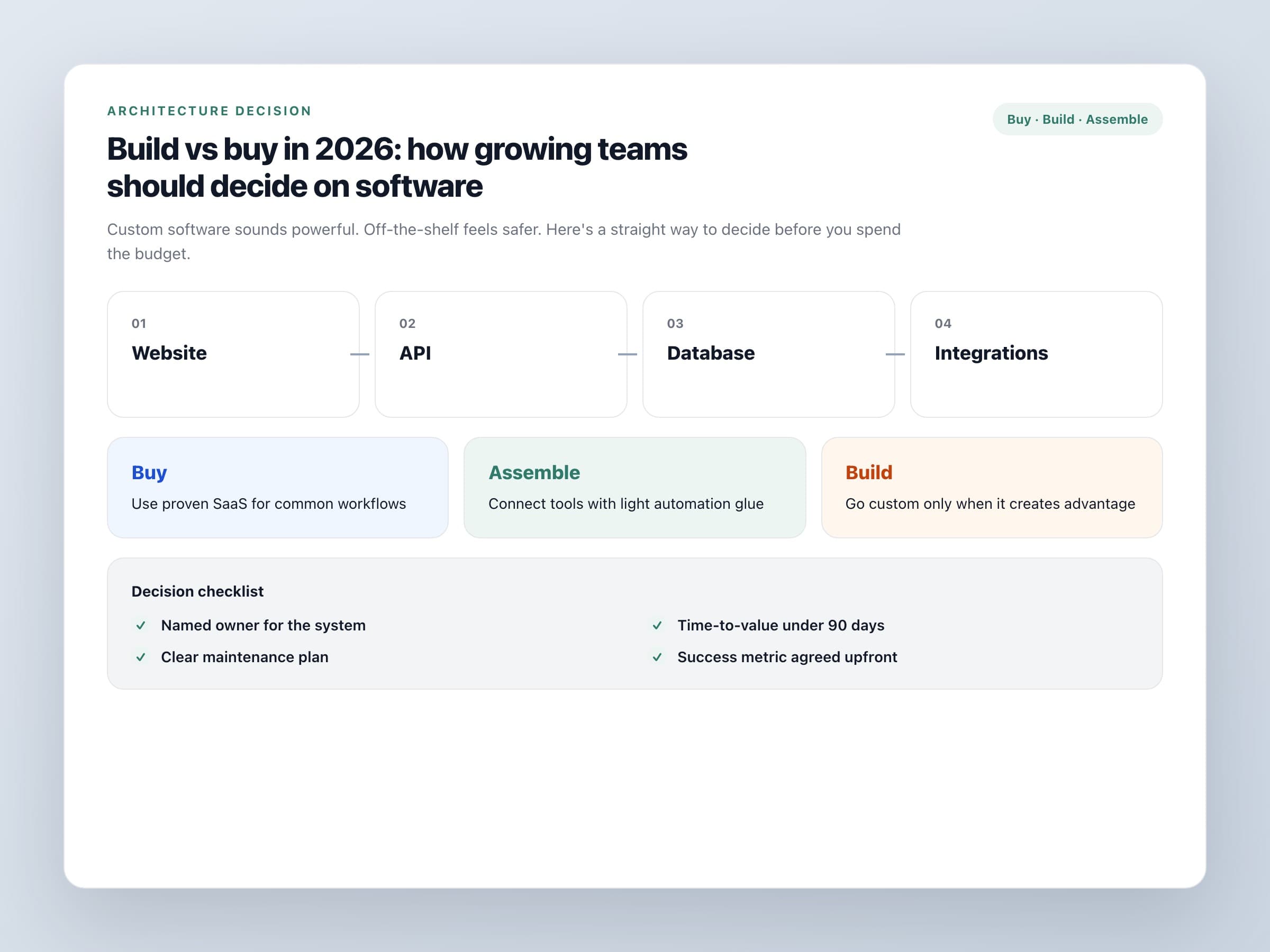
Custom software sounds powerful. Off-the-shelf feels safer. Here's a straight way to decide before you spend the budget.
Practical guides on Zoho CRM, websites and growth for Australian businesses, written by the Vixo team in Forestville, NSW. See related services →
What's actually behind build vs buy
Most teams argue about technology when they should argue about constraint. Are you short on time, short on a unique process, short on people who can maintain code, or short on competitive differentiation? That answer points to buy, build or assemble. Not a vague preference for 'custom'.
Three paths, not two
Buy or configure
Use proven SaaS when the problem is common. You pay licences and put energy into adoption, not reinventing pipelines.
Assemble
Connect tools you already trust with automation and light custom glue. Plenty of 'we need custom software' briefs are really integration and UX problems.
Build
Go custom only when the workflow is unique and gives you an advantage competitors can't buy in a template.
If you can't explain why your process is unique in one sentence, you probably don't need a custom system yet.
A frame you can use in one meeting
Score each option against time-to-value, total cost of ownership, risk and advantage. A cheap custom build that nobody can maintain isn't cheap. A suite licence nobody logs into isn't simple.
Signs you should buy
Common workflow
Sales pipelines, invoicing, ticket queues and standard reporting are solved problems.
You need value this quarter
Configuration and training beat a greenfield build when revenue depends on speed.
Thin internal IT
If nobody owns security patches and upgrades, SaaS shifts that burden.
Signs you should build
Clear competitive edge
Pricing engines, specialised portals or marketplace mechanics you can't buy off the shelf.
The product fights you
You spend more wrestling the tool than serving customers.
You can own it
You have budget and people for hosting, updates and knowledge transfer after launch.
Put the decision in writing
Close with a one-liner: we buy because ___. We build because ___. We revisit in ___ months. Teams that skip that sentence reopen the debate every quarter, and that indecision often costs more than either option.
