
Technology • 12 MIN READ
AI automation without ripping out your stack: a 2026 playbook for SMEs
You don't need a full platform swap to use AI. Start with a few automations that save hours and leave your current tools in place.
Practical guides on Zoho CRM, websites and growth for Australian businesses, written by the Vixo team in Forestville, NSW. See related services →
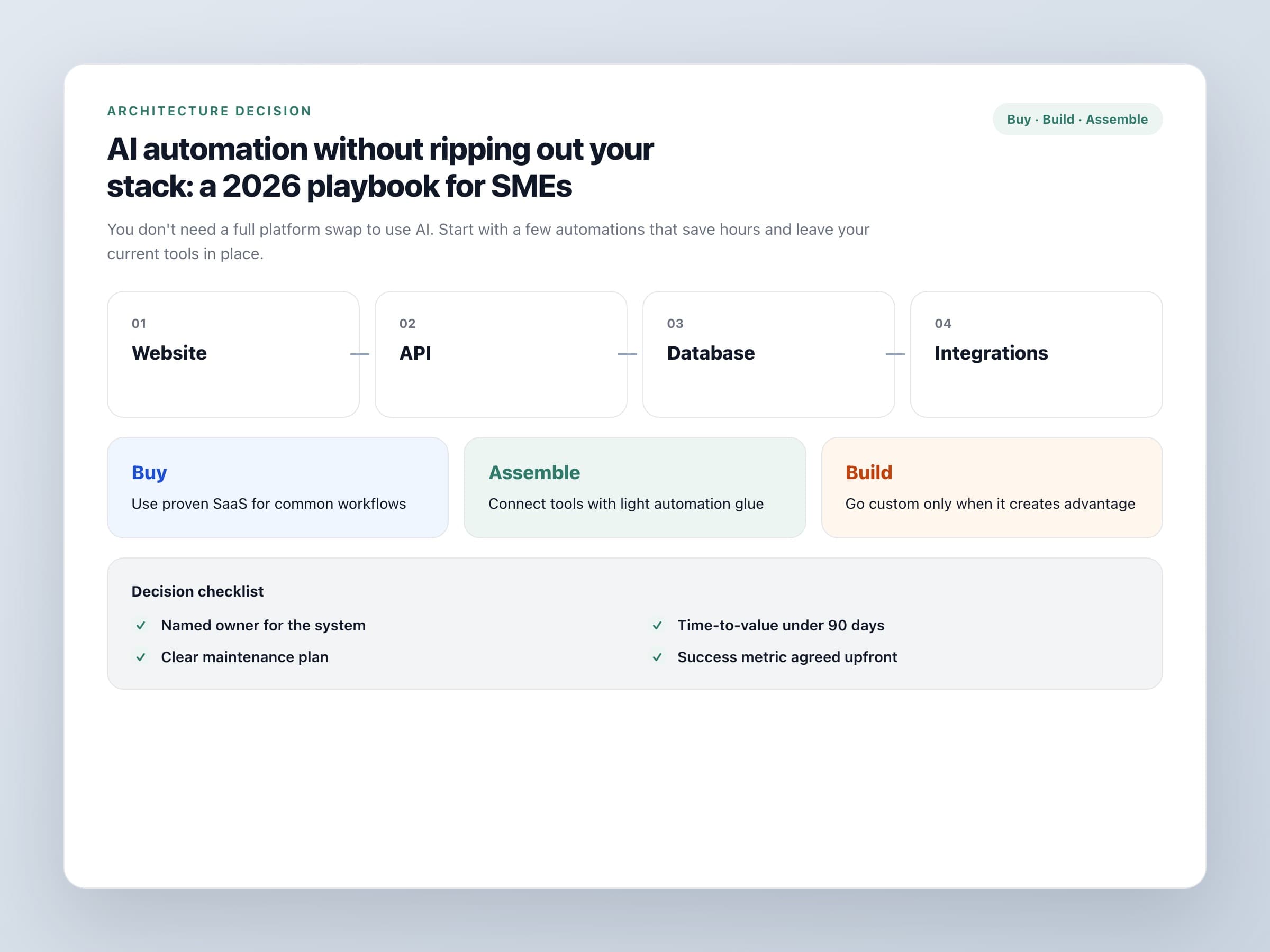
Skip the full rebuild. Automate the annoying bits first
Most growing Australian teams don't need a brand new operating system. They need fewer handoffs, faster follow-up and cleaner data between tools they already pay for. AI helps when it clears repeatable work. It hurts when it forces a six-month migration before anyone sees a win.
Start by splitting work into two piles: what should stay human, and what should never have been manual. Customer judgment stays with people. Copy-paste, status chasing, first-draft emails and report assembly can go to automation.
Jobs worth automating first
Lead handoffs
When a form, inbox or chat creates a lead, the CRM record should appear, get an owner and trigger a first response without someone retyping fields.
Follow-up drafts
AI can draft chase emails from deal context. Your team still chooses tone and timing, but they stop staring at a blank screen.
Status and reporting
Weekly pipeline or delivery summaries can come from live records instead of screenshots pasted into slides.
Nudges for stuck work
Idle deals, unanswered tickets and missing fields should ping the owner before a manager has to go looking.
The best AI project is the one your team barely notices after week four, because the busywork simply stopped showing up.
How to pick the first workflow
Choose one path with a named owner, a weekly time cost and a clear success metric. Time-to-first-touch on inbound leads. Quote follow-up completion. Hours spent on the Monday report. If you can't measure it, you won't know whether the automation helped.
A simple 30-day rollout
Week 1: Map and clean
Write down the current steps, owners and tools. Fix duplicate fields and fuzzy stages before you automate them, or you'll just scale the mess.
Week 2: Connect and draft
Wire the trigger and destination systems. Keep AI outputs in draft or internal-only mode so people can check quality.
Week 3: Soft launch
Turn it on for one team or one lead source. Collect the failures and tighten the rules.
Week 4: Measure and expand
Compare the metric to your baseline. Only then copy the pattern to a second workflow.
Keep it safe
Decide what the bot may send externally, what needs approval, and how you pause everything if it misfires. Keep a human check on customer-facing messages until quality is solid. Log rule changes so you can see who changed what.
Assemble and automate first. Rebuild only when your current stack truly can't carry the workflow.
